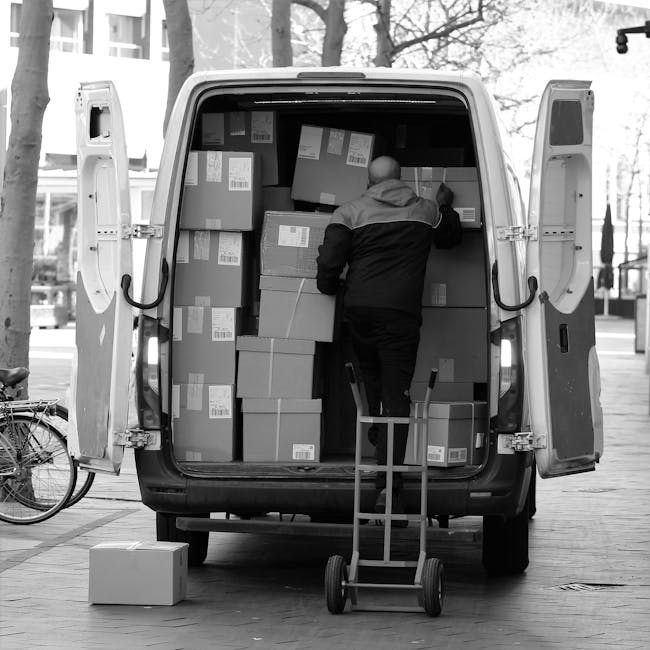
St Annes Church van loading rules for Limehouse bookings: a practical guide for smooth, low-stress moves
If you are trying to understand St Annes Church van loading rules for Limehouse bookings, you are probably dealing with the kind of move where the details matter more than the big idea. Where can the van stop? How long can it wait? Can you load close to the entrance without causing a fuss or a fine? These are the small questions that decide whether a booking feels calm or slightly chaotic. And let's face it, in Limehouse, the street picture can change fast from one corner to the next.
This guide breaks the topic down in plain English. You will get a practical view of how loading usually works around church or site-based bookings, what to check before the van arrives, how to reduce delays, and which mistakes catch people out most often. The aim is simple: help you plan the job properly, protect the schedule, and avoid awkward surprises on the day.
For broader planning around local moves, you may also find our guide to pavement and parking regulations affecting Limehouse moves useful, especially if your booking also involves tight kerbside space or shared access.
Table of Contents
- Why St Annes Church van loading rules for Limehouse bookings matters
- How the loading process works
- Key benefits and practical advantages
- Who this is for and when it makes sense
- Step-by-step guidance
- Expert tips for better results
- Common mistakes to avoid
- Tools, resources and recommendations
- Law, compliance, standards, or best practice
- Options, methods, or comparison table
- Case study or real-world example
- Practical checklist
- Conclusion
- Frequently asked questions
Why St Annes Church van loading rules for Limehouse bookings Matters
Loading rules sound boring until they cause a delay. Then they matter a lot.
If your booking involves St Annes Church, or a nearby church access point used for loading, the rules around where a van may stop, how long it may remain, and how the crew should manage the handover can shape the whole move. In Limehouse, this is especially important because access can be narrow, footfall can be unpredictable, and parking spaces can disappear in minutes. The wrong setup can block residents, upset staff, or slow down a removal by half an hour or more. Not ideal when you have furniture on a trolley and a driver trying to read the street at the same time.
In practical terms, loading rules matter because they help you answer four questions before the vehicle turns up:
- Can the van stop close enough to make the job efficient?
- Is there a safe path for moving items from the building to the vehicle?
- Do you need permissions, a permit, or timed access?
- How do you avoid conflicts with pedestrians, traffic, or site operations?
When these questions are sorted early, the job tends to feel smoother. People are calmer. Items are handled with more care. And the driver is not forced to improvise beside double-parked cars and a surprised cyclist. Truth be told, that is half the battle.
This is also where local knowledge helps. A moving team familiar with Limehouse conditions will usually think ahead about kerb space, loading bays, and likely pinch points before the day begins. That level of planning can be the difference between a tidy 20-minute load and a messy morning that keeps everyone waiting.
How St Annes Church van loading rules for Limehouse bookings Works
There is not one single universal loading rule that fits every booking. The exact setup depends on the site, the street layout, any local restrictions, and the way the booking has been arranged. That said, the process usually follows a fairly predictable pattern.
1. Confirm the access point
First, identify the exact loading location. Is the van using a side entrance, a forecourt, a rear access lane, or a street-side stop nearby? Small details matter here. A site may look easy on a map, but the actual access point could involve a narrow turn, a gate, a step, or a busy corner.
2. Check the loading window
Some bookings work around a specific time slot. Others allow a wider window, but the van still needs to coordinate with the site's use of the space. If the church or nearby property has events, services, deliveries, or public activity, the loading window may be restricted. That means timing is not just a convenience issue; it is part of the access plan.
3. Match the vehicle to the space
A smaller van can often make life easier in Limehouse. If the street is tight, a full-size moving truck may not be the best fit unless access has been checked properly. The right vehicle size helps avoid awkward reversing, blocked movement, and wasted time shuffling between spots.
4. Use a safe loading route
The path from the building to the van should be as direct as possible. If the route involves stairs, kerbs, wet paving, or a shared entrance, extra care is needed. One of the most common mistakes is assuming "it's only a short distance" means it is automatically easy. It never quite works out like that, does it?
5. Keep the handover organised
A smooth load works best when somebody is clearly responsible for key decisions on the spot. Who opens the access point? Who checks the item list? Who gives the go-ahead when the van is in place? A simple chain of responsibility avoids the classic moving-day silence where everyone thinks someone else is sorting it.
6. Leave room for the real world
Street conditions change. A delivery may arrive. Someone may have parked awkwardly. A resident might need access past the van. That is why good loading practice includes a bit of flexibility. Not chaos. Just enough room to adjust without derailing the job.
For readers handling wider move planning, our article on Tower Hamlets council permits for Limehouse removals gives a helpful sense of how permit planning can affect timing and stopping arrangements.
Key Benefits and Practical Advantages
Getting the loading rules right is not only about avoiding trouble. It also brings real, practical benefits that show up in the quality of the move.
- Less wasted time: The crew can get on with the job instead of circling the block looking for a workable stop.
- Lower risk of damage: A shorter, cleaner loading route means fewer chances to bump walls, doors, or furniture.
- Better safety: Controlled loading helps protect people, especially where there is traffic, footfall, or uneven ground.
- Stronger schedule control: If the van knows where it can stop and for how long, the whole plan becomes easier to manage.
- Less stress for everyone: The site team, driver, and customer all know what is happening. That calm matters more than people admit.
There is also a trust factor. When your booking is clearly organised, it reflects well on everyone involved. It says the move has been thought through rather than left to chance. And in a busy part of London, that sort of discipline is genuinely useful.
Expert summary: the best loading jobs are rarely the ones with the fanciest equipment. They are the ones where the access point, vehicle size, timing, and responsibility are all agreed before anyone starts lifting.
Who This Is For and When It Makes Sense
This topic is most relevant if your booking involves one of these situations:
- a removal van needing access to a church-adjacent loading point
- events equipment or supplies being delivered to a site in Limehouse
- a household move where the van must stop near St Annes Church or a nearby access route
- an office, charity, or community booking that depends on controlled loading times
- a job involving heavy, awkward, or valuable items that need a short carrying distance
It also matters if the booking happens in a part of Limehouse where parking pressure is high. In those cases, even a good van and a skilled driver will struggle without some planning. A booking that looks straightforward on paper can become more complicated once you factor in pedestrians, narrow roads, timed restrictions, and the simple fact that London streets rarely stay quiet for long.
If you are a customer, it makes sense to think about loading rules before confirming the appointment. If you are a mover, it makes sense to ask the right questions before arrival. Either way, the goal is the same: know where the vehicle goes, what it can do, and what the backup plan is if the first option fails.
Step-by-Step Guidance
Here is a practical way to handle St Annes Church van loading rules for Limehouse bookings without overcomplicating things.
- Check the site details early. Confirm the exact entrance, access route, and whether there are any restrictions on stopping nearby.
- Measure the practical space. Don't guess. A van that looks fine on arrival may still be awkward if the street is tighter than expected.
- Ask about time restrictions. Find out whether loading must happen outside service times, event times, or resident access periods.
- Decide the vehicle size. Use the smallest suitable vehicle if access is tight. Bigger is not always better. Sometimes it is just, well, bigger.
- Plan the walking route. Work out where items will travel from building to van, and remove avoidable obstacles if possible.
- Assign a clear point of contact. One person should make decisions on-site to avoid mixed instructions.
- Protect the surroundings. Use care around floors, kerbs, doors, and any shared entry space.
- Build in a buffer. Allow time for a slightly slow start, a parking change, or a quick access adjustment.
- Confirm the finish plan. Know whether unloading or a second trip is required, especially for larger moves.
A useful habit is to think in layers: access, timing, vehicle, route, safety. If those four are in place, the rest usually falls into line. If one is missing, the job starts to wobble. Not always dramatically, but enough to feel it.
For moves involving narrow streets and shared access, you may also find our guide to moving guide for narrow street flats in Limehouse helpful, because the same access logic often applies.
Expert Tips for Better Results
Here is where experience earns its keep. These are the small things that save time.
- Go for clear communication, not long messages. A few precise details beat a rambling note sent at midnight.
- Take a quick look at the street in person if you can. Photos and maps help, but the real street tells you more. You will notice the slopes, the corners, the odd bollard, the "why is that bin there?" moment.
- Keep bulky items grouped together. This reduces searching and rehandling once the van is ready.
- Pack for the route, not just the box. If an item must travel over steps or a rough threshold, it needs better wrapping than something going straight from room to van.
- Use the quietest workable time. Early mornings are often calmer, though local activity can vary. A 9:00 slot may feel very different from 8:00, depending on the street.
- Think about weather. Rain on paving changes grip and pace. A damp morning can make loading slower than expected. Nothing dramatic, just enough to matter.
A small but important point: the best teams do not just move things fast. They move things steadily. That steadiness is what keeps a site-based booking under control.
If you are trying to avoid unexpected costs, our piece on hidden fees in Limehouse removals is a useful companion read, especially when access difficulties could affect the final price.
Common Mistakes to Avoid
Most loading problems are avoidable. The trouble is that they look small until they snowball.
- Assuming the van can stop wherever it likes. This is the classic one. A loading plan that relies on luck tends to end badly.
- Not checking event timing. A church or local site may have other activity you do not see from the outside.
- Choosing a van that is too large. It might seem efficient, but if access is tight, a big vehicle can slow everything down.
- Forgetting about foot traffic. If people need to pass through the same area, the crew must keep the route tidy and safe.
- Leaving the decision making until the driver arrives. That is too late. By then the clock is already moving.
- Underestimating stairs, thresholds, or narrow doors. These little obstacles can eat time fast.
And one more thing: do not rely on "we'll see on the day." That approach sounds flexible, but in practice it often turns into confusion. A little planning avoids a lot of back-and-forth. It really does.
Tools, Resources and Recommendations
You do not need fancy kit to manage a good loading process, but a few tools and habits make life easier:
- Measuring tape: helpful for checking doorways, item dimensions, and tight corners.
- Mobile photos: useful for showing the driver the access point before arrival.
- Simple item list: keeps the loading order clear and reduces forgotten items.
- Protective coverings: blankets, wraps, or floor protection can prevent avoidable marks.
- High-visibility awareness: not necessarily equipment every time, but a mindset that keeps people visible and attentive near traffic.
- Contact details for the site lead: essential if the van arrives slightly early or needs a quick update.
For wider move preparation, many customers also look at pricing and quotes alongside access planning, because a realistic quote usually depends on how straightforward the loading point is. If the route is awkward, it is better to know that upfront.
You might also explore man with van services if your booking is smaller and you do not need a full-scale removal setup. For more involved work, removal services may be the better fit.
Law, Compliance, Standards, or Best Practice
Loading near a church, public building, or roadside access point in Limehouse should follow normal UK road safety and site safety expectations. The exact legal position can depend on location-specific restrictions, local authority controls, the vehicle, and whether any parking or stopping permissions are needed. Because of that, it is sensible to treat the rules carefully rather than assume there is a one-size-fits-all answer.
As a general best practice, the booking should account for:
- safe access and egress for the van and for pedestrians
- clear communication with the site contact before arrival
- reasonable loading times that do not block others unnecessarily
- careful handling of items to reduce damage risk
- traffic awareness where the van is close to the carriageway or pavement edge
If parking controls, loading exemptions, or special permissions are involved, they should be checked in advance. A good mover will usually flag that early. A good customer will ask. That simple back-and-forth prevents a lot of drama later on.
Health and safety also matters on site. If items are heavy, awkward, or likely to require team lifting, the work should be planned accordingly. For more on site standards and safety expectations, you can review our health and safety policy and insurance and safety information. Those pages are useful if you want to understand how safe handling is approached in practice.
Options, Methods, or Comparison Table
Different bookings need different approaches. The best option depends on access, item size, and how busy the surrounding area is.
| Method | Best for | Advantages | Possible drawback |
|---|---|---|---|
| Small van near the entrance | Light to medium loads, tight streets | Easier manoeuvring, quicker parking, simpler loading | May need more trips if the load is large |
| Standard removal van | Most household moves and mixed loads | Balanced capacity and efficiency | Can be awkward in narrow Limehouse access points |
| Pre-planned shared loading window | Sites with timed access or multiple users | Organised, predictable, less conflict | Less flexible if the schedule slips |
| Timed curbside loading with porterage | Short-distance loads from building to van | Good control, manageable pace | Requires coordination and clear on-site responsibility |
In many Limehouse bookings, the smallest suitable vehicle is the most efficient choice. That may sound obvious, but people still overestimate what a big van solves. More space is lovely. More space plus a blocked street is not so lovely.
Case Study or Real-World Example
Here is a realistic example, based on the kind of booking people often face in Limehouse.
A customer needed items collected from a nearby property with a short walk to the van loading point beside St Annes Church. The original plan assumed the van could wait directly outside. On arrival, it turned out the space was tighter than expected and a second vehicle had already claimed part of the kerbside area. Nothing dramatic, but enough to make the first plan useless.
The team adjusted quickly. They moved to a slightly more suitable stopping point, shortened the carrying route, and loaded the heaviest items first while the access window was clear. Because the load had been packed in order and the contact person was ready, the delay stayed small. The booking still took longer than planned, but it stayed orderly.
The lesson is simple. The best backup plan is not a dramatic rescue. It is a sensible second option that was thought about before anyone opened the van doors.
That sort of planning is especially useful for urgent sameday removals in Limehouse, where there is less room for trial and error.
Practical Checklist
Use this checklist before the booking day. It saves trouble, honestly.
- Confirm the exact loading point near St Annes Church or the relevant access area.
- Check whether the van can stop legally and safely at that point.
- Ask about time restrictions, events, services, or other site activity.
- Choose the right vehicle size for the street and the load.
- Measure any tight doors, gates, stairs, or thresholds.
- Prepare a clear item list and loading order.
- Make sure the site contact and driver can reach each other quickly.
- Plan for weather, traffic, and a small timing buffer.
- Keep pathways clear for pedestrians and residents.
- Confirm what happens if the preferred loading spot is unavailable.
One quick human reminder: if you can solve a problem before the van arrives, do it. It is always easier than solving it with the engine running and somebody asking if the clock is still on.
Conclusion
St Annes Church van loading rules for Limehouse bookings are really about control, timing, and a bit of local common sense. If you know where the van can stop, how the load will move, and who is responsible for the handover, the whole job becomes much easier. That applies whether you are moving furniture, delivering equipment, or arranging a site-based booking with limited space.
Most problems come from rushed assumptions, not impossible access. So take the time to confirm the route, match the vehicle to the space, and keep the plan simple. A calm move is rarely an accident. It is usually the result of a few sensible choices made early.
Get a free quote today and see how much you can save.
And if you are still weighing up the right support for your move, our removals and home moves pages can help you compare the options without making it all more complicated than it needs to be.
Frequently Asked Questions
What are St Annes Church van loading rules for Limehouse bookings?
They are the practical access, stopping, timing, and safety rules that affect how a van can load near the site or nearby access point in Limehouse. The exact arrangement depends on the location, the vehicle, and any local restrictions.
Do I need permission to load near St Annes Church?
Sometimes, yes. It depends on whether the van is stopping on private access, a managed site, or a road with parking controls. It is always better to confirm the arrangement in advance rather than assume it will be fine.
Can a large moving van fit on Limehouse streets?
Sometimes, but not always comfortably. Limehouse streets can be tight, and a large van may need more room to park or manoeuvre. In many cases, a smaller van or a more careful loading plan is the safer choice.
What should I check before the van arrives?
Check the exact loading point, the time window, any access restrictions, the item list, and the contact details for the person on site. A few minutes of preparation can prevent a lot of backtracking.
How do I avoid delays on the day?
Use a clear loading order, keep the route free of obstacles, and make sure someone can make decisions quickly if the planned stop is unavailable. Delays often come from indecision, not from the move itself.
Are loading rules different for church-related bookings?
They can be. Church sites may have event times, shared access, or visitor movement that changes how loading should be handled. The safest approach is to check the specific site conditions rather than treating every booking the same.
What happens if the van cannot stop right outside?
You usually need to use the nearest safe and legal alternative stop and adjust the carrying route. That is why it helps to have a backup plan before the booking starts.
Can I use a man and van service for this kind of booking?
Yes, in many cases. A man and van service can be a good fit for smaller or more flexible moves, especially where access is tight and you want a simple setup.
How do I know if my booking needs extra safety planning?
If the load includes bulky furniture, narrow stairs, shared access, or a busy street position, then yes, it likely does. Safety planning is worth doing even for small jobs when the surroundings are awkward.
Will loading near a church or public site affect the price?
It can, depending on how long loading takes, how difficult the access is, and whether a larger vehicle or extra labour is needed. That is why a clear quote should reflect the real conditions, not just the item count.
What is the smartest way to prepare for a Limehouse loading slot?
Confirm the route, keep the item list tidy, choose the right vehicle size, and allow a little extra time. If you can, check the location once before the move. That small bit of prep often pays for itself.
Where can I find more help with booking details?
You can start with the company's contact us page, or review the terms and conditions if you want to understand booking expectations more clearly.
If you want a final practical note, keep the plan simple, keep the loading route clear, and keep one person in charge on the day. That alone removes a surprising amount of stress. And once the van door shuts, it is all a bit easier from there.